


Cicero On Himself
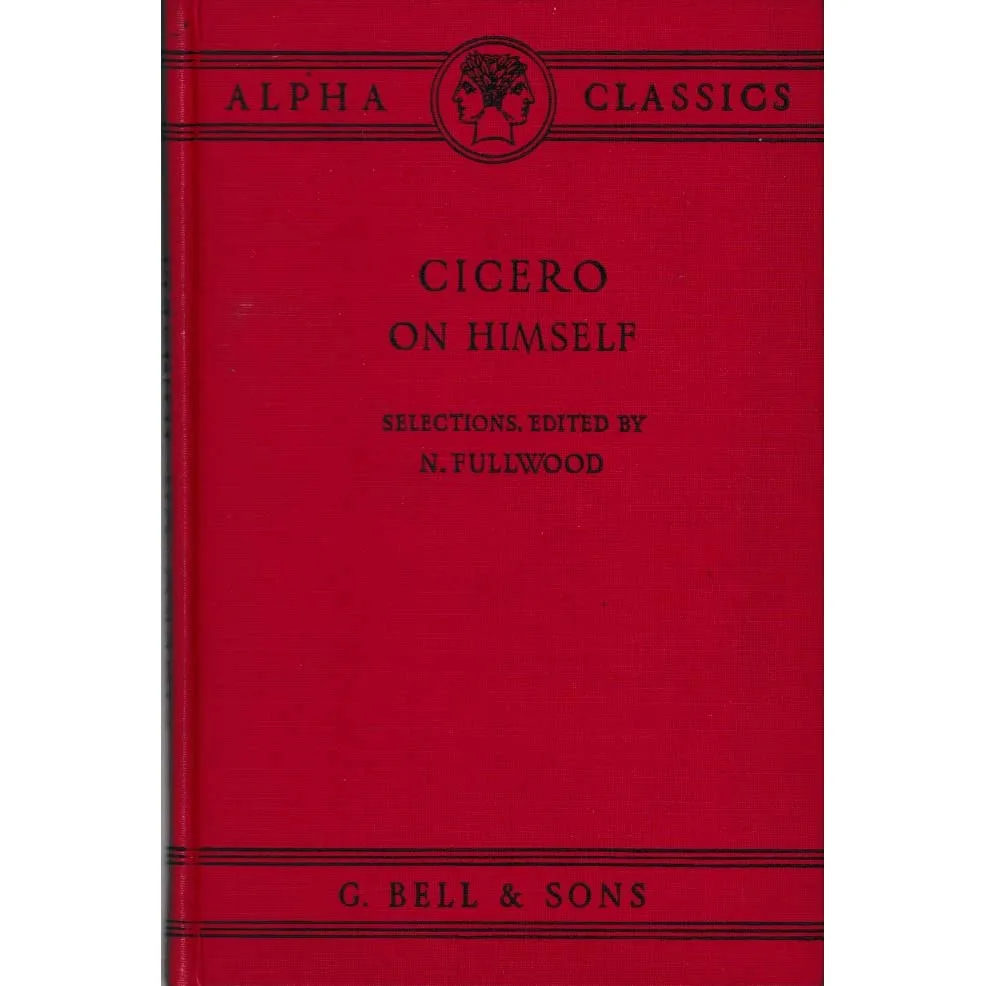
Publisher: Alpha Classics
Format: Hardback
ISBN: none
Cicero on Himself (1950)
Editor: N. Fullwood • Series: Alpha Classics
ISBN: none (Cicero preferred citations to ISBNs)
Condition: Good (upright, discursive, pleasantly smug)
Imprint: Crappy Old Books
Provenance: Ex–Old Palace School, Croydon (where rhetoric met rain and the rhetoric won)
Here he is, the original content creator: Marcus Tullius Cicero, writing about his favourite subject—Marcus Tullius Cicero. This neat 1950 Alpha Classics school edition condenses the choicest morsels from speeches, letters and self-congratulatory asides into a pocket guide to Roman self-branding. You get the highlight reel: the consulship that saved the Republic (you may have heard), the Catilinarian drama (he mentions it once or twice), the exile (tragic), the recall (ecstatic), and enough O tempora, o mores to power a small province.
Condition “Good” here means the book has survived generations of budding orators with dignity intact. The boards are straight, the spine firm, the gilt doing its level best. Expect the schoolroom trifecta: an Old Palace stamp (ceremonial), a pencil shelf mark in severe cursive (bureaucratic), and the ghost of a date-due slip contemplating retirement. Pages are an honest ivory with a courteous dusting of foxing—more cappuccino froth than Pompeian ash. If any previous scholar has trafficked in marginalia, it’s of the improving kind: “tricolon!” “praeteritio!!” and an underlined “quid tandem” deployed like a rapier.
N. Fullwood keeps the apparatus brisk and humane. The introductions behave like a kindly tutor who knows you have a train to catch; the notes translate rhetorical Latin into English that still bites; the vocabulary lists lurk at the back like well-drilled auxiliaries. It’s the sort of school edition that treats style as a civic virtue and expects you, too, to place your verbs where they can be seen from the forum.
As a reading copy, it’s excellent; as a relic, it’s a miniature senate with better timekeeping. Place it on your desk and watch your emails become mysteriously well-structured. Read it and you may find yourself drafting thank-you notes with periods of balanced cadence and the occasional devastating antithesis. Side effects include an urge to say “by the immortal gods!” when the kettle boils.
Talking points for dinner or detention:
-
Cicero practically invents PR while pretending to resist it.
-
The Catiline orations read like live-blogged statecraft with better verbs.
-
His letters reveal the man behind the toga: anxious, funny, occasionally petty, always quotable.
-
You will learn more practical prose from three pages here than from a semester of “impactful communications.”
Physical charms, frankly declared: corners agreeably rounded by satchels; hinges sound; no tragic tears; a page or two with a small, disciplined dog-ear (decision under pressure). Smell profile: library with a hint of chalk and the faintest echo of school polish.
Crappy Old Books guarantee: we don’t sell mint; we sell lived-in Latin. If you want a sterile reprint, the world is full of them. If you want Cicero in a Croydon school blazer, still polishing his periods and yours, this is your copy.
Keep browsing: See more Ancient Classics books Other books by N Fullwood
